

When the Heart Falters, the Brain Pays: A Neurosurgeon's World Heart Day Warning

World Heart Day 2026 — The Brain–Heart Connection: This educational hero banner illustrates how cardiovascular health and brain health are connected through cerebral circulation, highlighting stroke prevention, mechanical thrombectomy for ischemic stroke,
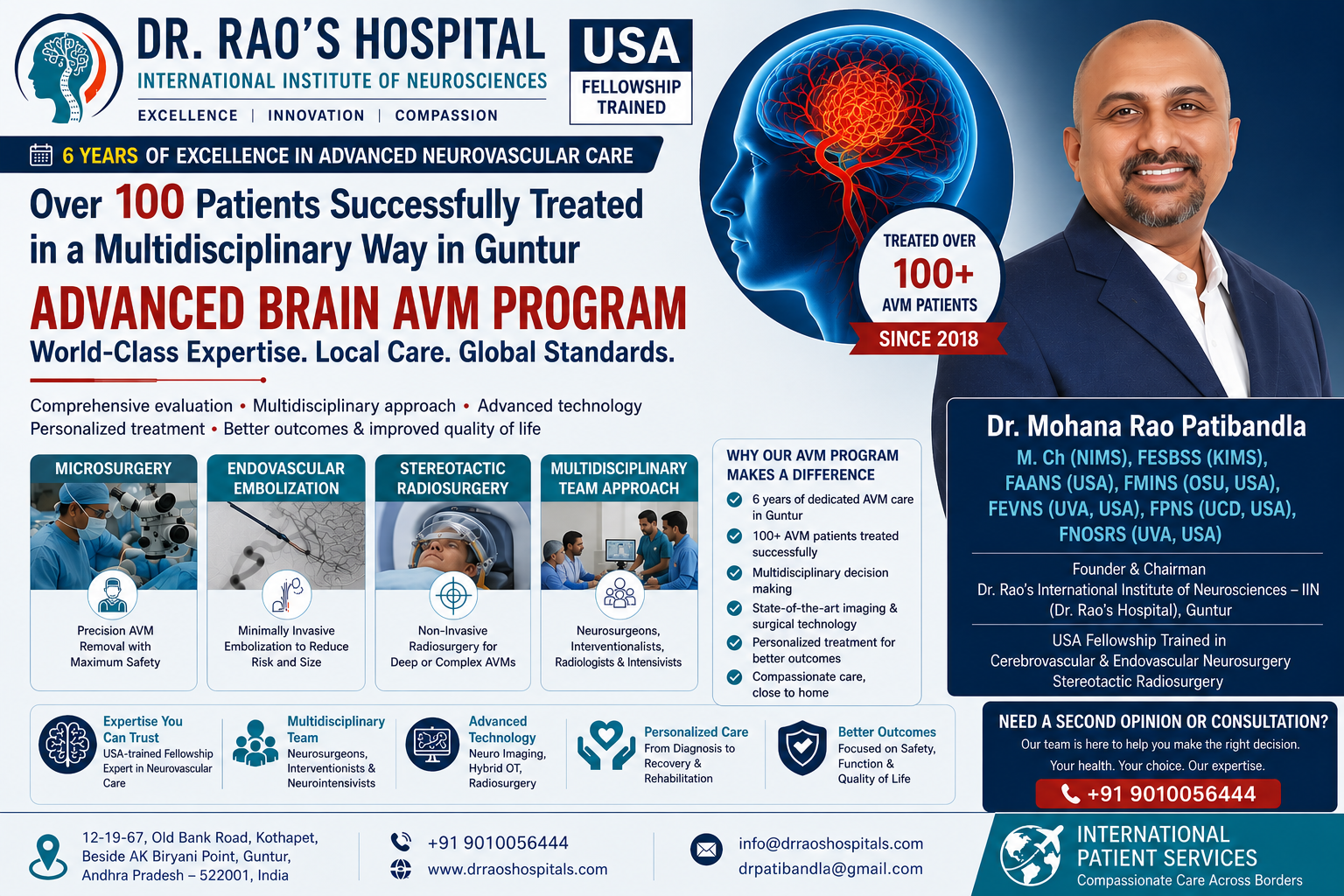
Over 100 patients with brain arteriovenous malformations (AVMs) have been treated through a personalized multidisciplinary approach at Dr. Rao's Hospital – International Institute of Neurosciences, where USA-trained neurosurgeon Dr. Rao integrates microsu
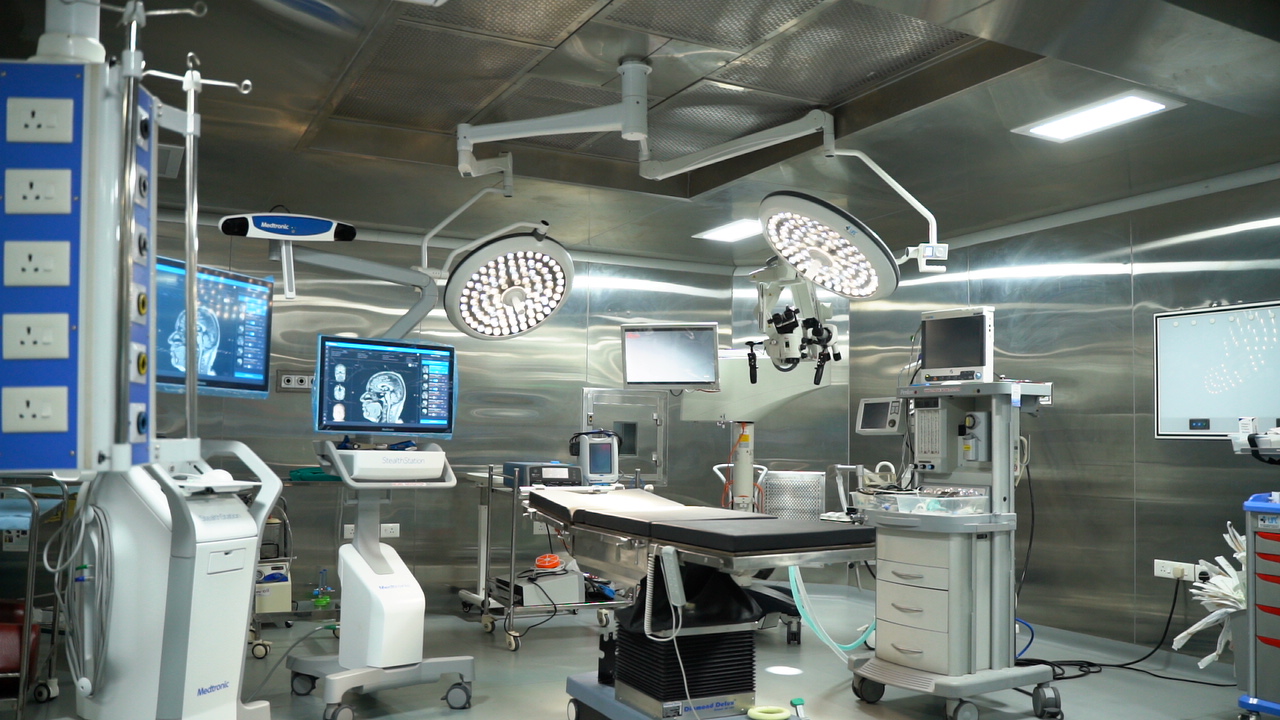
The high-tech neurosurgery operating room at Dr. Rao's Hospital, Guntur featuring advanced imaging and navigation systems for precise brain and spine surgeries.
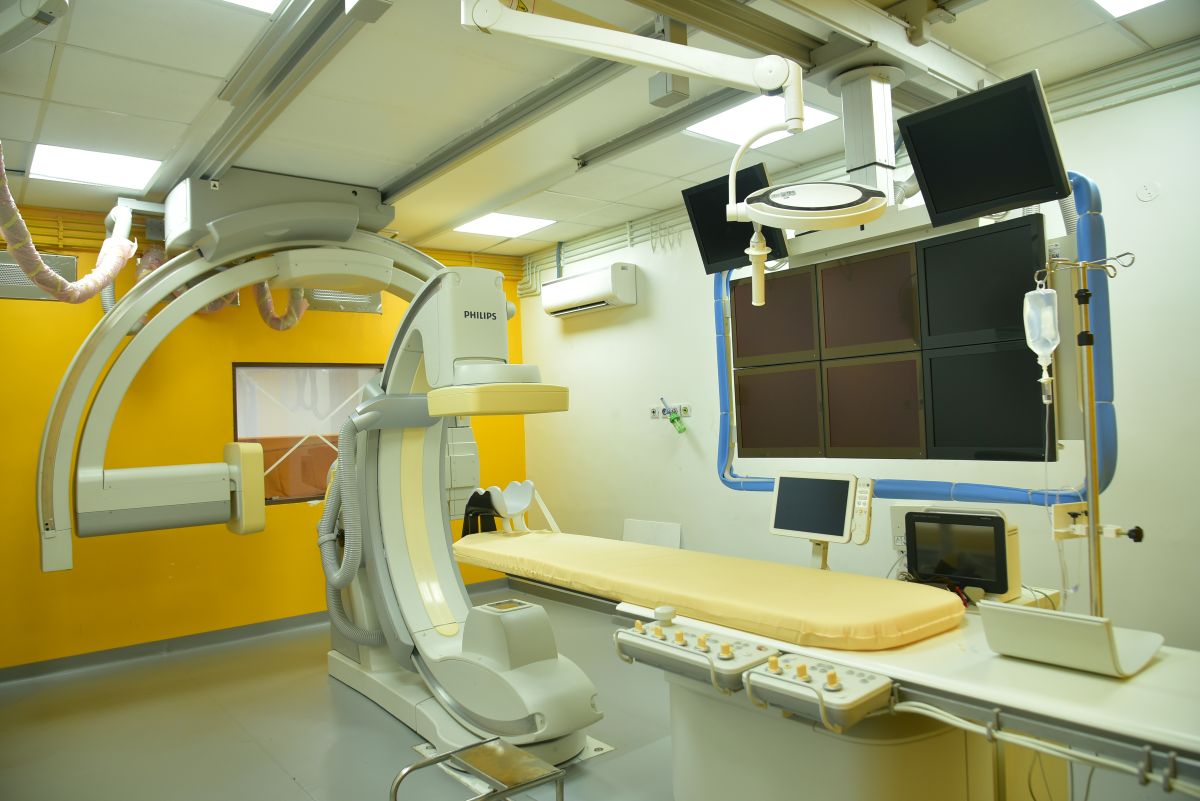
The advanced biplane cath lab at Dr. Rao's Hospital, designed for precision neurovascular procedures and minimally invasive surgeries, first in Andhra Pradesh and Telangana in India.
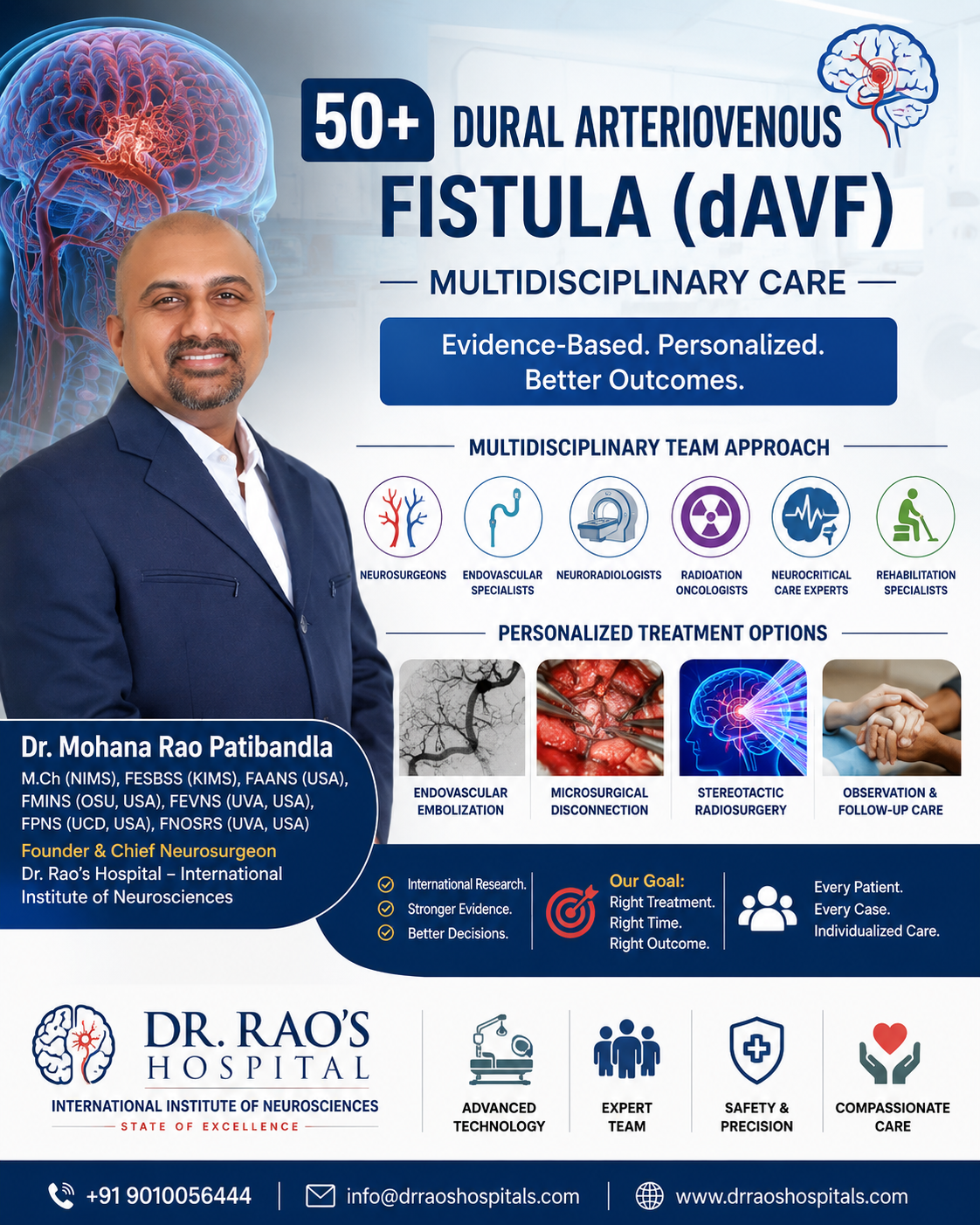
Comprehensive multidisciplinary care for dural arteriovenous fistulas (DAVFs) at Dr. Rao's Hospital – International Institute of Neurosciences. Advanced diagnosis, microsurgery, endovascular embolization, and stereotactic radiosurgery are integrated to de
Dr. Rao explains the science connecting heart disease and brain stroke, brain haemorrhage, silent brain injury, and neurocardiology – World Heart Day 2026.
International fellowship-trained neurosurgeon Dr. Mohana Rao Patibandla explains the science connecting heart disease, stroke, brain hemorrhage, silent brain injury, and neurocardiology during World Heart Day 2026.
World Heart Day 2026 is drawing attention to cardiovascular disease as the world's leading cause of death, but a growing body of neuroscience research highlights another urgent reality: many of the most devastating neurological disorders begin in the heart. Stroke, brain hemorrhage, silent brain injury, vascular dementia, and even certain emergency neurosurgical conditions are closely linked to cardiovascular health through what specialists describe as the Brain–Heart Connection.
In this World Heart Day 2026 educational editorial, internationally fellowship-trained cerebrovascular and endovascular neurosurgeon Dr. Mohana Rao Patibandla, Founder and Chief Neurosurgeon of Dr. Rao's Hospital – International Institute of Neurosciences (IIN) in Guntur, India, explains how hypertension, atrial fibrillation, diabetes, obesity, carotid artery disease, sleep apnea, and silent vascular injury can damage the brain years before patients experience recognizable symptoms.
The editorial also explores neurocardiology, emergency stroke care, mechanical thrombectomy, brain aneurysm awareness, Takotsubo syndrome, and the role of artificial intelligence in the future of stroke prevention.
World Heart Day 2026: Why This Story Matters
Cardiovascular disease remains the leading global cause of mortality, while stroke continues to be one of the leading causes of death and long-term disability worldwide. Every year, millions of people experience ischemic stroke or brain hemorrhage, and many more develop silent brain injuries that remain undetected until memory loss, balance problems, or dementia emerge later in life.
According to international cardiovascular and stroke organizations, controlling modifiable cardiovascular risk factors—including hypertension, diabetes, smoking, obesity, atrial fibrillation, and high cholesterol—can substantially reduce the risk of stroke and other cerebrovascular diseases.
Dr. Patibandla says World Heart Day should also be recognized as a day to educate families about protecting the brain.
“People understand that uncontrolled blood pressure can lead to a heart attack, but many do not realize that the same blood pressure silently damages brain blood vessels every day. The healthiest brain begins with a healthy cardiovascular system.”
Executive Summary
The Brain–Heart Connection describes the continuous two-way relationship between the cardiovascular system and the nervous system.
Every heartbeat delivers oxygen-rich blood to nearly 86 billion neurons inside the brain.
The brain regulates heart rhythm, blood pressure, breathing, and vascular tone through the autonomic nervous system.
Cardiovascular diseases increase the risk of ischemic stroke, brain hemorrhage, silent brain injury, aneurysm rupture, and vascular dementia.
Severe neurological injuries can also affect the heart through stress-induced neurocardiac mechanisms.
Modern neurosurgery increasingly recognizes prevention as equally important as emergency intervention.
The Brain–Heart Connection: One Circulatory System, Two Vital Organs
For decades, cardiology and neurology were viewed as separate specialties. Today, research in neurocardiology shows that the heart and brain function as one integrated physiological network.
Every heartbeat pumps oxygen and nutrients through approximately 600 kilometres of blood vessels that supply the brain. The brain, in return, controls cardiovascular function through the brainstem, hypothalamus, insular cortex, and autonomic nervous system.
When either organ becomes diseased, the other often suffers.
How the Heart Protects the Brain
The heart maintains:
Cerebral blood flow.
Oxygen delivery.
Glucose transport.
Blood pressure regulation.
Removal of metabolic waste.
Without uninterrupted circulation, brain tissue begins suffering injury within minutes.
How the Brain Protects the Heart
The brain controls:
Heart rate.
Blood pressure.
Breathing.
Stress hormone release.
Sympathetic and parasympathetic balance.
This bidirectional communication explains why stroke patients may develop heart rhythm abnormalities and why cardiac disease can produce neurological emergencies.
Neurocardiology: Where Neuroscience Meets Cardiology
Neurocardiology is one of the fastest-growing interdisciplinary fields connecting cardiovascular medicine with neuroscience.
Rather than treating stroke solely as a neurological disease or hypertension solely as a cardiovascular disease, neurocardiology studies how dysfunction within one organ affects the other.
Important components include:
Autonomic nervous system regulation.
Heart rhythm disorders after stroke.
Stress cardiomyopathy following brain injury.
Blood pressure variability and cerebral circulation.
Cerebral autoregulation.
Dr. Rao notes that understanding neurocardiology has changed emergency stroke management and neurocritical care worldwide.
Silent Brain Injury: The Hidden Epidemic
One of the most overlooked neurological disorders is silent brain injury.
Unlike a major stroke, silent brain injury often produces no obvious weakness, speech difficulty, or facial drooping. MRI scans may reveal permanent damage despite the absence of symptoms.
What MRI Can Reveal
Silent vascular injury commonly includes:
Silent cerebral infarcts.
White matter hyperintensities.
Cerebral microbleeds.
Small vessel ischemic disease.
These abnormalities may accumulate over years.
Why Silent Brain Injury Matters
Silent brain injury has been associated with increased future risk of:
Stroke.
Memory decline.
Walking difficulty.
Depression.
Vascular cognitive impairment.
Dementia.
Dr. Rao emphasizes that preventing silent vascular injury begins long before symptoms develop.
“Many patients believe they are healthy because they have never experienced a stroke. However, MRI may show years of silent vascular damage caused by uncontrolled hypertension or diabetes.”
Hypertension: India's Silent Brain Killer
High blood pressure is one of the strongest modifiable risk factors for neurological disease.
Hypertension damages both large arteries and microscopic penetrating blood vessels supplying deep brain structures.
How High Blood Pressure Injures the Brain
Chronic hypertension causes:
Thickening of arterial walls.
Narrowing of cerebral arteries.
Reduced cerebral blood flow.
Vessel rupture.
Chronic inflammation.
These changes increase the risk of:
Ischemic stroke.
Intracerebral hemorrhage.
Silent brain infarcts.
White matter disease.
Vascular dementia.
Brain Hemorrhage and Hypertension
Brain hemorrhage frequently occurs when weakened blood vessels rupture under elevated blood pressure.
Common locations include:
Basal ganglia.
Thalamus.
Pons.
Cerebellum.
Symptoms may develop suddenly with severe headache, weakness, vomiting, altered consciousness, or seizures.
“Brain hemorrhage is one of the most time-sensitive emergencies in neurosurgery,” says Dr. Patibandla. “Early diagnosis and specialized neurocritical care can significantly influence outcomes.”
Atrial Fibrillation: The Irregular Heartbeat That Can Cause Stroke
Atrial fibrillation (AF) is the most common sustained cardiac rhythm disorder.
Instead of contracting normally, the upper chambers of the heart beat irregularly, allowing blood clots to form inside the heart.
These clots may travel directly into brain arteries.
Cardioembolic Stroke
Cardioembolic strokes often affect major cerebral arteries including:
Middle cerebral artery.
Internal carotid artery.
Basilar artery.
These strokes are frequently severe because they involve large vessel occlusions.
Warning Signs of Atrial Fibrillation
Patients should seek medical evaluation for:
Irregular pulse.
Palpitations.
Fatigue.
Dizziness.
Breathlessness.
Episodes of fainting.
Many individuals discover atrial fibrillation only after experiencing a stroke.
Carotid Artery Disease: The Highway Between Heart and Brain
The carotid arteries supply most of the brain's blood flow.
Plaque accumulation inside these arteries may gradually reduce circulation or release emboli into cerebral arteries.
Symptoms That Require Immediate Evaluation
Temporary vision loss.
Sudden weakness.
Speech difficulty.
Facial numbness.
Transient ischemic attacks (TIAs).
TIAs are warning strokes and should never be ignored.
Diabetes, Obesity and Small Vessel Brain Disease
Diabetes accelerates vascular aging throughout the body.
Inside the brain, elevated blood glucose damages microscopic blood vessels responsible for supplying deep brain structures.
This increases the likelihood of:
Silent infarcts.
Cognitive decline.
Stroke.
Poor neurological recovery after stroke.
Obesity further contributes through chronic inflammation, hypertension, insulin resistance, and sleep apnea, creating what physicians recognize as metabolic syndrome.
Sleep Apnea: The Night-Time Stroke Risk Many Families Miss
Obstructive sleep apnea repeatedly interrupts breathing during sleep.
Each episode temporarily reduces oxygen delivery while simultaneously increasing blood pressure and cardiovascular stress.
Untreated sleep apnea has been associated with increased risk of:
Stroke.
Hypertension.
Atrial fibrillation.
Memory impairment.
Resistant hypertension.
“Sleep quality is increasingly recognized as an important part of brain health,” Dr. Patibandla explains. “Treating sleep apnea is not only about improving sleep—it may also reduce cardiovascular and neurological risk in appropriate patients.”
The Brain–Heart Risk Matrix
Understanding cardiovascular disease from a neurological perspective helps patients recognize that protecting the heart also protects the brain.
The Brain–Heart Risk Matrix: How Cardiovascular Diseases Damage the Brain
The relationship between cardiovascular disease and neurological disease is complex, but the message for patients is simple: protecting the heart protects the brain. Every major cardiovascular risk factor has a direct impact on cerebral circulation and increases the risk of stroke, brain hemorrhage, silent brain injury, or long-term cognitive decline.
Hypertension is one of the strongest modifiable risk factors for neurological disease. Persistently elevated blood pressure damages both large arteries and the tiny blood vessels deep within the brain. Over time, this silent vascular injury increases the risk of ischemic stroke, intracerebral hemorrhage, silent brain infarcts, white matter disease, and vascular dementia.
Atrial fibrillation is another major contributor to stroke. This irregular heart rhythm allows blood to pool inside the heart, where clots can form. These clots may travel through the bloodstream and suddenly block major brain arteries, causing a cardioembolic ischemic stroke that often results in severe neurological disability if treatment is delayed.
Carotid artery disease affects the main blood vessels supplying oxygen-rich blood to the brain. As cholesterol-rich plaques narrow the carotid arteries, blood flow decreases and plaque fragments may break off and travel into cerebral arteries. This increases the risk of transient ischemic attacks (TIAs), ischemic stroke, and progressive cognitive decline.
Diabetes mellitus silently damages the smallest blood vessels throughout the body, including those in the brain. Chronic high blood sugar accelerates inflammation and vascular aging, increasing the likelihood of silent brain infarcts, small vessel disease, vascular cognitive impairment, and recurrent stroke.
Obesity and metabolic syndrome contribute to brain disease through multiple pathways. Excess body weight is associated with hypertension, insulin resistance, chronic inflammation, abnormal cholesterol levels, and sleep apnea, all of which increase the risk of stroke, brain hemorrhage, and long-term vascular damage.
Obstructive sleep apnea is an often-overlooked neurological risk factor. Repeated interruptions in breathing during sleep reduce oxygen delivery to the brain while causing sudden spikes in blood pressure. Untreated sleep apnea has been linked to increased risks of stroke, atrial fibrillation, resistant hypertension, memory impairment, and cognitive decline.
Smoking damages blood vessels throughout the body and significantly increases the risk of ischemic stroke, carotid artery disease, cerebral aneurysm formation, and aneurysm rupture. Tobacco also accelerates atherosclerosis and impairs the body's ability to repair damaged blood vessels.
High cholesterol promotes plaque formation within arteries supplying the brain. As these plaques grow, they narrow blood vessels and increase the risk of ischemic stroke and vascular cognitive impairment. Effective cholesterol management is therefore an important part of long-term brain protection.
World Heart Day 2026 Message
World Heart Day is traditionally associated with preventing heart attacks. Neuroscience adds another message: Protect your heart to protect your brain.
Recognizing cardiovascular risk factors early, controlling blood pressure, identifying atrial fibrillation, managing diabetes, stopping smoking, improving sleep, and responding immediately to stroke symptoms can help reduce the burden of stroke and brain hemorrhage worldwide.
“The greatest success in neurosurgery is not performing emergency brain surgery—it is preventing patients from ever needing one,” concludes Dr. Mohana Rao Patibandla.
1. Stroke Treatment in Guntur
Patients experiencing sudden weakness, speech difficulty, or vision loss should immediately seek specialized Stroke Treatment in Guntur at a comprehensive neuroscience center where rapid brain imaging and advanced stroke care are available.
2. Brain Hemorrhage Treatment in Guntur
Uncontrolled hypertension remains one of the leading causes of brain bleeding, making timely Brain Hemorrhage Treatment in Guntur critical for reducing mortality and long-term neurological disability.
3. Brain Aneurysm Treatment in Guntur
A sudden thunderclap headache may indicate a ruptured aneurysm and requires emergency Brain Aneurysm Treatment in Guntur, including evaluation for microsurgical clipping or endovascular coiling.
About Dr. Mohana Rao Patibandla
Dr. Mohana Rao Patibandla is Chief Neurosurgeon and founder of Dr. Rao's Hospital – International Institute of Neurosciences (IIN), Guntur, Andhra Pradesh. A minimally invasive neurosurgeon, pediatric neurosurgeon, cerebrovascular endovascular neurosurgeon, skull base neurosurgeon, neuro-oncologist and stereotactic radiosurgeon, he brings advanced neurosurgical care to patients from across India and abroad.
Dr. Rao completed his MBBS at NTR University of Health Sciences and his M.Ch in Neurosurgery at Nizam's Institute of Medical Sciences (NIMS), Hyderabad. He then pursued fellowships in epilepsy and skull base surgery at KIMS Hospitals, Secunderabad; pediatric neurosurgery at the University of Colorado Denver; endoscopic skull base surgery at Ohio State University; and surgical neuro-oncology, Gamma Knife and endovascular neurosurgery at the University of Virginia Medical Center.
He has authored 66 publications and received the AANS/CNS Section on Tumors BrainLab Community Neurosurgery Award for outstanding brain tumor research (2018). At MISSABCON-PASMISS 2026 in Chennai, he won the Best Free Paper Award and the COSSCON Medal Paper Gold Medal for his work on endoscopic transnasal odontoidectomy in complex craniovertebral junction disorders. He is the author for the NDVT Healht section.
Under his leadership, Dr Rao's IIN, recognized by Forbes India, offers intraoperative neurophysiological monitoring, functional brain mapping, neuronavigation, a biplane catheterisation laboratory, a hybrid operation theatre and intraoperative CT.
About Dr. Rao's Hospital – International Institute of Neurosciences (IIN)
Dr. Rao's Hospital – International Institute of Neurosciences (IIN) is a specialty neuroscience center in Guntur, Andhra Pradesh, founded by Dr. Mohana Rao Patibandla, Chief Neurosurgeon. It brings world-class brain and spine care to a non-metropolitan setting, so patients do not have to travel to a major city for advanced treatment. Dr Rao's IIN draws patients from across India and from overseas, and has been recognized by Forbes India.
The institute's clinical scope covers minimally invasive skull base surgery, endovascular surgery, stereotactic radiosurgery, neuro-oncology and pediatric neurosurgery. Its infrastructure includes intraoperative neurophysiological monitoring (IONM), functional brain mapping, neuronavigation, a biplane catheterisation laboratory, a hybrid operation theatre and intraoperative CT scan. These support precise, less invasive procedures and real-time safeguarding of critical brain and nerve function during surgery.
Address: Old Bank Street, beside AK Biryani Point, Kothapeta, Guntur, Andhra Pradesh
Media contact: 9010056444
Mohana Rao Patibandla
Patibandla Narayana Swamy Neurosciences LLP
+91 90100 56444
info@drraoshospitals.com
Visit us on social media:
LinkedIn
Instagram
Facebook
YouTube
X
Dr. Rao's Hosptial - the best neurosurgery hospital in India - with medical tourism
Legal Disclaimer:
EIN Presswire provides this news content "as is" without warranty of any kind. We do not accept any responsibility or liability for the accuracy, content, images, videos, licenses, completeness, legality, or reliability of the information contained in this article. If you have any complaints or copyright issues related to this article, kindly contact the author above.
